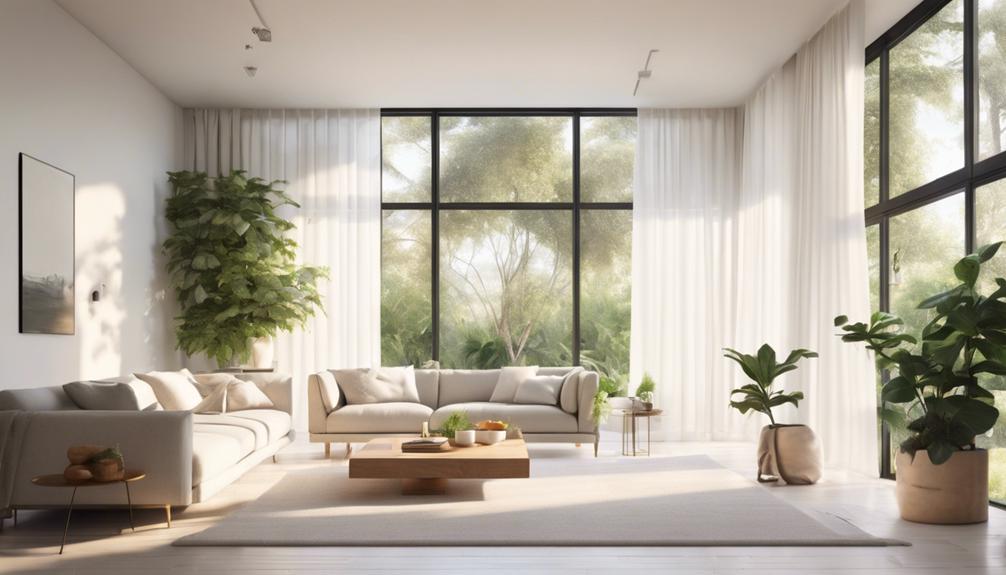
We’ve all experienced the transformative power of natural light in our homes, and by evaluating our spaces thoughtfully, we can harness that power to create brighter, more welcoming interiors. To get started, we identify areas in our home that soak up the most sunlight and analyze the direction of the sun. We’ll rearrange furniture, install larger windows, and strategically place mirrors to reflect and enhance natural light. By choosing the right colors and materials, we can amplify the light and create a warm, inviting atmosphere. Now, let’s explore more ways to tap into the full potential of natural light in our homes. Additionally, incorporating light, airy curtains instead of heavy drapes can maximize sunlight while maintaining privacy. Another approach is to keep windows clean and unobstructed, allowing as much natural light as possible to filter in. These simple home energysaving tips not only brighten up our living spaces but also reduce the need for artificial lighting, ultimately lowering energy consumption.
Assessing Your Home's Lighting
To get the most out of natural light, we need to understand how it currently functions in our home, so let's take a walk-through to identify the areas that receive the most sunlight. As we stroll through our living spaces, we'll notice that some rooms are brighter than others. Take note of the time of day and the direction the sun's rays are coming from. Are there any obstructions, like trees or buildings, blocking the sunlight? We might be surprised at how much natural light we're missing out on due to these obstacles.
As we explore, we'll see that certain areas, like south-facing windows, tend to receive more direct sunlight. We might notice that the morning sun pours into our kitchen, while the afternoon sun illuminates our living room. By recognizing these patterns, we can start to envision how to maximize the natural light in our home. We might consider rearranging our furniture to take advantage of the sun's path or using mirrors to reflect light into darker areas.
Optimizing Window Placement
As we've identified the areas in our home that receive the most sunlight, we can now focus on optimizing window placement to maximize the natural light that enters our living spaces. This step is important, as strategic window placement can make a significant difference in the amount of natural light that pours into our homes.
To get started, we'll want to assess the orientation of our windows. Ideally, we want our windows to face the direction that receives the most sunlight, whether that's south, east, or west. If possible, we can consider installing larger windows or adding skylights to bring in more natural light.
Next, let's think about the size and shape of our windows. Larger windows, especially those with a wider width, allow more natural light to enter our homes. We should also consider the style of our windows – casement windows, for instance, can be more effective at capturing natural light than double-hung windows.
Using Mirrors to Reflect Light
As we turn our attention to using mirrors to reflect light, we're excited to explore the strategies that can help us maximize natural light in our homes. We'll examine the best ways to place mirrors to amplify the light sources in our spaces, and how to position them to create a brighter, more welcoming atmosphere. By doing so, we'll uncover the secrets to making our homes feel more open, airy, and filled with natural light.
Mirror Placement Strategies
By strategically positioning mirrors, we can amplify the impact of natural light in our homes, making even the darkest spaces feel brighter and more welcoming. But where do we place them for maximum effect? One approach is to hang a mirror directly opposite a window, allowing the mirror to reflect the natural light and bounce it deeper into the room. We can also place mirrors on adjacent walls to create a "mirror tunnel" effect, which helps to distribute natural light more evenly throughout the space. Another tactic is to position a mirror near a doorway or hallway, where it can reflect natural light from adjacent rooms and create the illusion of a brighter, more spacious area. By experimenting with different mirror placements, we can find the perfect arrangement that makes our homes feel more airy, inviting, and connected to the outdoors.
Reflecting Light Sources
We can harness the power of mirrors to redirect natural light from various sources, such as lamps or skylights, to areas that need it most, creating a brighter and more balanced atmosphere in our homes. By strategically placing mirrors, we can bounce natural light into darker corners, making our spaces feel more inviting and connected. This technique is especially useful in rooms with limited natural light, such as basements or north-facing rooms.
We've all been in homes where a single window seems to be the only source of light. By placing a mirror opposite that window, we can reflect the natural light deeper into the room, making it feel more spacious and airy. This simple trick can make a huge difference in the ambiance of our homes. Plus, it's an affordable and easy way to maximize natural light without breaking the bank or calling in a contractor. With a little creativity and some clever mirror placement, we can create a brighter, more welcoming space that feels like home.
Selecting Light-Enhancing Colors
As we work to maximize natural light in our homes, we're going to explore how selecting the right colors can make a big impact. We'll start by considering our wall color options, focusing on shades that will help reflect and amplify the natural light. By opting for a neutral shade palette, we can create a bright and airy atmosphere that feels welcoming and inviting.
Wall Color Options
Selecting the right wall color can make a significant difference in how much natural light is reflected and amplified within a room. We want our homes to feel bright, airy, and welcoming, and the colors we choose can greatly impact this. When it comes to maximizing natural light, we need to think about which colors will help reflect and amplify it.
Here are some wall color options to explore:
| Color Option | Effect on Natural Light |
|---|---|
| Soft Pastels | Soften and diffuse natural light, creating a calming atmosphere |
| Creamy Whites | Reflect and amplify natural light, making rooms feel brighter |
| Light Grays | Help distribute natural light evenly, reducing harsh shadows |
| Warm Beiges | Enhance the warmth of natural light, creating a cozy ambiance |
Neutral Shade Palette
By exploring a neutral shade palette, we can pinpoint light-enhancing colors that won't compete with natural light, allowing it to take center stage in our homes. This means we can ditch bold, dark hues that absorb light and opt for softer, calming shades that reflect it instead. Think creamy whites, gentle beiges, and soothing grays – these colors will create a sense of airiness and brightness in our spaces.
We can also experiment with warm, muted tones like taupe, blush, and mauve, which add coziness without overwhelming the natural light. And, let's not forget about the power of whites and creams – they're perfect for making small rooms feel larger and more luminous. By choosing a neutral shade palette, we can create a sense of continuity and flow throughout our homes, making it feel more welcoming and inviting. Plus, these calming colors will help reduce visual clutter, allowing our eyes to focus on the beauty of natural light.
Minimizing Light-Blocking Obstacles
We remove or rearrange furniture and decorative items that block natural light from entering our windows and glass doors. It's surprising how quickly clutter can accumulate, but by taking a step back and evaluating our space, we can identify areas where we can create a clearer path for natural light to shine through. This might mean rearranging our bookshelves, moving a bulky armchair, or even temporarily relocating a few decorative pieces.
By doing so, we open up our space and create a sense of airiness, allowing natural light to flow in and illuminate our rooms. We also take into consideration the placement of curtains and blinds, making sure they're not obstructing the light. We opt for sheer or translucent fabrics that filter the light, rather than blocking it entirely.
Another common obstacle is the positioning of mirrors. While they can add depth and visual interest to a room, if placed incorrectly, they can also reflect light away from the space. We experiment with different placements to find the spot that allows the mirror to enhance, rather than hinder, the natural light.
Creating a Brighter Interior
As we've cleared the way for natural light to enter our space, we can now focus on amplifying its effects by carefully choosing interior elements that will reflect and enhance its brilliance. We want to create an atmosphere that feels warm, inviting, and connected to the outdoors. To do this, we'll select materials and colors that will bounce natural light around the room, making it feel more spacious and airy.
We'll start by choosing light-colored paints for our walls, which will help to reflect and diffuse the sun's rays. We'll also opt for flooring that's light in color and has a glossy finish, as this will help to amplify the light that enters the room. Additionally, we'll incorporate mirrors strategically throughout the space, as they'll help to bounce light into darker corners and create the illusion of more natural light.
Frequently Asked Questions
Can Smart Glass Windows Really Save Energy and Reduce Glare?
We're curious about smart glass windows – can they really save energy and reduce glare? The short answer is yes! These innovative windows use electrochromic technology to adjust tint levels, letting in natural light while keeping heat and glare at bay. By reducing the need for artificial lighting and cooling, smart glass windows can lead to significant energy savings. Plus, they minimize eye strain caused by harsh sunlight. It's a win-win for our homes and the environment!
How Do I Clean Windows to Maximize Natural Light Without Streaks?
Did you know that dirty windows can reduce natural light by up to 20%? We're shocked too! When it comes to cleaning our windows, we want to make sure we're doing it right to maximize that precious natural light. We've learned that using a microfiber cloth and a 50/50 water and white vinegar solution does the trick. Plus, drying our windows with a lint-free cloth or paper towel prevents streaks. Now, let's get cleaning and soak up that sunshine!
Can LED Light Bulbs Mimic Natural Daylight for Better Ambiance?
We're curious about LED light bulbs mimicking natural daylight for a cozier ambiance. Honestly, they can get close, but not quite replicate the real deal. LED bulbs with a high color temperature (5000K-6500K) can produce a similar brightness and tone to natural daylight. However, they often lack the warmth and subtle color variations that make natural light so unique. Still, they're a great alternative for areas with limited natural light or during darker months.
Will Replacing Old Windows With New Ones Really Make a Difference?
As we gaze out at our homes, we often wonder: will new windows really make a difference? It's like asking if a fresh coat of paint can rejuvenate a tired canvas. The answer is a resounding yes! Replacing old windows can be a game-changer, flooding our spaces with natural light and banishing the gloom. It's like opening a treasure chest, revealing a brighter, more vibrant us. We'll bask in the radiance, feeling more alive, more connected to the world outside.
Can Plants Really Purify the Air and Improve Natural Light Quality?
We're curious about the air-purifying powers of plants, and we're not alone! It's amazing, but yes, plants can really purify the air and even improve natural light quality. Studies show that certain plants, like peace lilies and spider plants, can remove toxins and pollutants from the air. And, as a bonus, they can also help reflect and diffuse natural light, making our homes feel brighter and healthier.