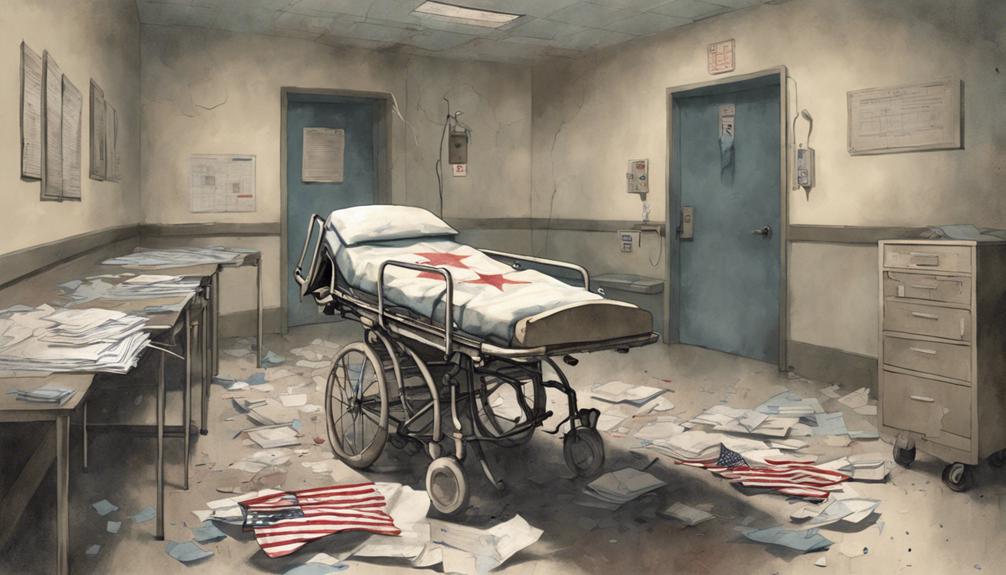
In addition, we face an uphill battle in providing quality care to our nation's veterans, as entrenched obstacles persist in the form of delayed access, staffing shortages, funding waste, care coordination failures, and unmet mental health needs. Long wait times, inadequate transportation, and limited facility availability hinder timely access. We also struggle with staffing shortages, burnout, and inefficient care coordination. Moreover, funding waste and ineffective allocation hinder our ability to provide essential services. Unaddressed mental health needs, including PTSD and substance abuse, worsen the situation. As we tackle these challenges, we're forced to confront the harsh realities of our system's shortcomings – and that's just the beginning.
Barriers to Timely Healthcare Access
Numerous obstacles hinder our ability to access timely healthcare, a reality that disproportionately affects veterans who have sacrificed so much for our country. As a nation, we owe it to these brave men and women to make sure they receive the care they need, when they need it. Unfortunately, various barriers stand in the way, causing undue stress and suffering for those who have already given so much.
We face logistical challenges, such as long wait times, inadequate transportation options, and limited healthcare facilities in rural areas. These obstacles are further complicated by the complexity of the healthcare system, which can be overwhelming for even the most resilient veterans. Many struggle to navigate the bureaucracy, leading to frustration and disillusionment.
Moreover, we must acknowledge the impact of socioeconomic factors on healthcare access. Veterans from low-income backgrounds may lack the resources to afford copays, transportation, or childcare, making it even harder for them to access care. Additionally, mental health stigma and lack of cultural competency among healthcare providers can deter veterans from seeking help. It's our responsibility to address these barriers and make certain that our veterans receive the timely, quality care they deserve. By understanding these challenges, we can work towards creating a more equitable and accessible healthcare system for those who have served our nation.
Staffing Shortages and Burnout
As we explore further into the challenges facing the Veterans Affairs healthcare system, we're confronted with the harsh reality that we're struggling to keep our healthcare workforce afloat, plagued by staffing shortages that are driving our dedicated professionals to the brink of burnout. This isn't just a numbers game – it's a human crisis. Our nurses, doctors, and support staff are shouldering an unsustainable workload, forced to make impossible choices between providing quality care and meeting the overwhelming demand. The consequences are devastating: compassion fatigue, decreased morale, and, ultimately, a decline in the quality of care our veterans deserve.
We're not just losing talented professionals to exhaustion; we're also struggling to recruit and retain new talent. The pipeline of future healthcare workers is drying up, and we're left scrambling to fill the gaps. It's a vicious cycle: understaffing leads to burnout, which exacerbates the staffing shortage, perpetuating the cycle. We can't afford to lose our most valuable assets – our people. We need to prioritize their well-being, provide the support they need, and create a work environment that fosters growth, not exhaustion. The fate of our veterans' care depends on it. We owe it to them, and to ourselves, to find a solution to this crippling crisis.
Funding Inadequacies and Waste
We’re compelled to face the harsh reality that our healthcare system is hemorrhaging funds due to inefficiencies and waste, exacerbating the struggle to provide quality care to our nation’s heroes. It’s a staggering fact: billions of dollars are being squandered on redundant administrative costs, unnecessary procedures, and outdated technology. This waste not only drains our resources but also diverts attention away from the critical needs of our veterans. Addressing these inefficiencies is not just a financial necessity but a moral imperative to ensure our veterans receive the care they deserve. By streamlining operations and investing in modernized systems, we can reallocate resources to improve patient outcomes and even contribute valuable insights to global health initiatives. Prioritizing efficiency and innovation will not only strengthen our domestic healthcare system but also position us as leaders in addressing broader health challenges worldwide.
We're not just talking about a few misplaced dollars; we're talking about a systemic problem that perpetuates mediocrity. When funds are wasted, it means essential services and treatments are delayed or denied to those who need them most. It's unacceptable that our veterans, who've given so much, are forced to wait in line for months or even years for necessary care. The situation is further complicated by the lack of transparency in funding allocations, making it difficult to identify areas of waste and implement meaningful reforms.
It's our collective responsibility to make sure that every dollar is spent wisely and efficiently. We must demand greater accountability from our healthcare leaders and policymakers, pushing for stronger oversight and more effective resource allocation. By tackling these funding inadequacies and waste, we can redirect precious resources towards providing the high-quality care our veterans deserve. It's time for a change – our nation's heroes are counting on us.
Inefficient Care Coordination Systems
How can our healthcare system expect to provide quality care when veterans are forced to navigate a challenging network of disconnected providers, each working in isolation, resulting in duplicated efforts, lost records, and delayed treatments? It's a demanding task, to say the least. As we work to provide the best possible care for our nation's heroes, we're hindered by inefficient care coordination systems.
We know that veterans often require complex, multi-specialty care, which is difficult to coordinate across different providers and facilities. This lack of coordination leads to:
- Inconsistent care plans: Without a unified approach, veterans may receive conflicting advice or treatment plans from different providers.
- Lost or incomplete medical records: When records are scattered across multiple providers, it's easy for important information to fall through the cracks.
- Delays in treatment: The lack of coordination can lead to prolonged wait times for appointments, procedures, and medications, further exacerbating health issues.
It's our responsibility to make sure that our healthcare system is equipped to provide seamless, integrated care for our veterans. By streamlining care coordination, we can reduce errors, improve health outcomes, and provide the quality care that our nation's heroes deserve.
Unmet Mental Health Needs
Veterans often return from service with invisible wounds, struggling to cope with the trauma they've endured, and all too frequently, their mental health needs are left unaddressed. As a nation, we're still grappling with the weight of this reality. We've seen it time and time again – veterans struggling to adjust to civilian life, plagued by nightmares, anxiety, and depression. The numbers are striking: according to the VA, nearly 30% of veterans experience PTSD, and one in five veterans has a mental illness or substance abuse disorder.
We know that mental health care is a critical component of overall well-being, yet we're still falling short. We're not doing enough to provide our veterans with the support they need to heal. The consequences are profoundly higher – suicide rates among veterans are markedly higher than the general population. It's heartbreaking to think that those who've served our country with bravery and honor are struggling to find peace.
We need to do better. We need to prioritize mental health care, investing in programs that provide timely, accessible, and evidence-based treatment. We need to break down barriers to care, ensuring that veterans can get the help they need without jumping through hoops. And we need to recognize the importance of peer support, connecting veterans with others who understand their struggles. It's our duty to serve those who've served us.
Frequently Asked Questions
How Does the VA Prioritize Healthcare Services for Veterans With Multiple Conditions?
When we think about veterans dealing with multiple health conditions, we wonder how their care gets prioritized. We've learned that healthcare providers use a patient-centered approach, considering the veteran's unique needs and preferences. They assess the severity of each condition, identifying which ones require immediate attention. By ranking their conditions in order of urgency, providers can develop a personalized care plan that addresses the veteran's most pressing needs first.
Are Veterans Eligible for Healthcare Services if They Were Dishonorably Discharged?
We're often asked if veterans with a dishonorable discharge can still get healthcare services. The short answer is, it depends. Typically, the Department of Veterans Affairs doesn't provide benefits to those with a dishonorable discharge. However, if they have a compensable service-connected condition, they might still be eligible for some healthcare services. It's best to check with the VA directly to determine individual eligibility.
Can Veterans Receive Care From Non-Va Healthcare Providers?
As we navigate the complex healthcare landscape, we're left wondering: can we seek care beyond the VA's walls? The answer is yes, we can receive care from non-VA healthcare providers. Through programs like the Veterans Choice Program, we're able to tap into community care, expanding our healthcare options. This means we can access timely, quality care from providers of our choice, a welcome respite from the VA's often overwhelmed system.
How Do VA Healthcare Services Address Cultural and Linguistic Diversity?
As we aim to provide quality care, we acknowledge the importance of addressing cultural and linguistic diversity. We're dedicated to ensuring our healthcare services are inclusive and sensitive to the unique needs of diverse veterans. We're working on training our staff to be culturally competent, offering language access services, and creating patient-centered care plans that respect individual differences. By doing so, we're committed to delivering personalized care that honors the diversity of those who've served.
Are There Any Alternative Therapies Offered for Veterans With Ptsd?
We've seen the devastating effects of PTSD on our fellow veterans, and we're glad to report that, yes, alternative therapies are offered to help them cope. While traditional treatments are often effective, we've found that yoga, acupuncture, and equine therapy, among others, can provide a much-needed respite from the emotional pain. By incorporating these alternative approaches, we're able to provide a more holistic approach to healing, and that's a game-changer for those struggling to find peace.