As we work towards reducing our environmental footprint, we're making intentional choices to minimize waste in our daily lives. We're ditching single-use plastics, opting for reusable water bottles and bags, and choosing products with minimal packaging. We're also buying in bulk, planning our grocery shopping, and using reusable containers to reduce waste. By repurposing household items and composting food waste daily, we're taking small steps towards a zero-waste lifestyle. By committing to these simple yet impactful actions, we're taking control of our environmental impact – and there's so much more we can do to make a difference.
Start With a Zero-Waste Mindset
As we begin this journey to reduce household waste, we must first acknowledge that a zero-waste mindset is not just a lofty goal, but a necessary shift in our daily habits and choices. It's about recognizing that every decision we make, from the products we buy to the way we consume, has a ripple effect on the environment. By adopting a zero-waste mindset, we're committing to being more mindful of our consumption and waste generation.
We're not perfect, and we won't get it right all the time. But by making conscious choices, we can greatly reduce our household waste. It starts with small changes, like being more intentional with our purchases, avoiding products with excessive packaging, and choosing items that can be reused or repurposed. We can also rethink our daily routines, like using reusable bags, containers, and water bottles.
As we work together to reduce our waste, we'll discover creative ways to repurpose items we would've otherwise thrown away. We'll find joy in the simplicity of living with less waste and the sense of community that comes with it. By embracing this mindset, we're not only reducing our environmental footprint but also cultivating a sense of responsibility and connection to the world around us. Let's take the first step together and start making a positive impact, one conscious choice at a time.
Reduce Single-Use Plastics
We're tackling one of the biggest contributors to household waste by cutting out single-use plastics, a move that'll not only declutter our homes but also help protect the planet. The harsh reality is that single-use plastics have become an integral part of our daily lives, from water bottles to straws, and even microbeads in our face wash. However, it's time to take a stand and make a change.
Here are some ways we can reduce our reliance on single-use plastics:
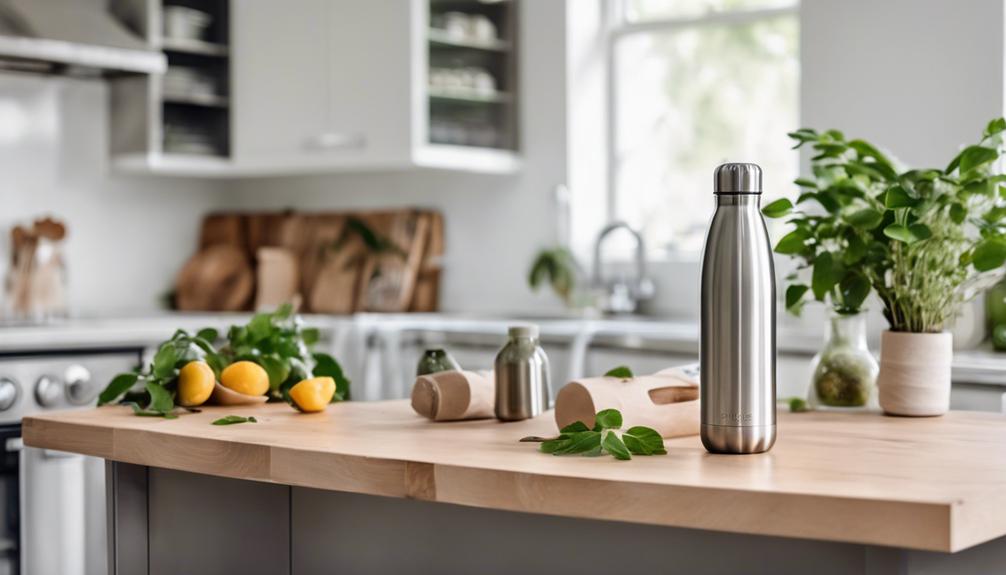
- Ditch the water bottles: Invest in a reusable water bottle that you can take with you on-the-go. Not only will you reduce waste, but you'll also save money in the long run.
- Say goodbye to straws: Opt for metal or paper straws instead of plastic ones. You can also decline straws altogether if you don't need them.
- Choose products with minimal packaging: When shopping, choose products with minimal or biodegradable packaging. This might mean buying in larger quantities or selecting items with refill options.
- Make your own cleaning products: Many cleaning products come in single-use plastic bottles. Consider making your own cleaning products using natural ingredients and reusable containers.
- Refuse microbeads: Opt for face wash and exfoliating products that use natural exfoliants like sugar or salt instead of microbeads.
Buy in Bulk Wisely
As we explore the benefits of buying in bulk, we've learned that it's important to do so wisely. We've realized that it's not just about stocking up, but also about being mindful of our storage space and avoiding overbuying mistakes. By being strategic about our bulk purchases, we can reduce waste and save money in the process.
Smart Storage Matters
We stock up on non-perishable items to save money and reduce trips to the store, but without a smart storage system, our bulk purchases can quickly turn into cluttered chaos. We've all been there – buying in bulk only to find ourselves drowning in a sea of cans, bottles, and packaging. But it doesn't have to be that way. By implementing a few simple strategies, we can keep our bulk purchases organized and our waste to a minimum.
Here are a few tips to get us started:
- Designate a storage space: Set aside a specific area for our bulk items to keep them out of the way but still accessible.
- Use stackable containers: Invest in containers that can be easily stacked and labeled to maximize storage space.
- Label and categorize: Label each container and categorize items by type to make it easy to find what we need.
- Store heavy items below: Place heavier items on lower shelves to prevent containers from toppling over.
- Keep it visible: Keep our storage area visible and easily accessible to prevent forgotten items from going to waste.
Avoid Overbuying Mistakes
By implementing smart storage strategies, we've set ourselves up for success, but even the most organized systems can be derailed by overbuying mistakes, so let's explore ways to buy in bulk wisely. It's tempting to stock up on items we use regularly, but buying too much can lead to waste and clutter. To avoid this, we should take stock of what we already have before buying in bulk. We can also set a "first in, first out" rule, ensuring older items get used before newer ones. Another trick is to store bulk purchases in airtight containers, keeping them fresh for longer. When shopping, we should stick to our lists and avoid impulse buys. Lastly, let's consider the shelf life of perishable items and plan our purchases accordingly. By being mindful of our buying habits, we can reduce waste and make the most of our bulk purchases.
Plan Your Grocery Shopping
Before heading to the store, we make a list and check what pantry staples we need to restock to avoid buying unnecessary items. We've all been there – standing in the middle of the grocery store, tempted by impulse buys and special deals. But with a little planning, we can avoid coming home with a bunch of stuff we don't really need.
Here are a few more strategies we use to plan our grocery shopping:
- Check what we already have: We take stock of what's already in our pantry, fridge, and freezer to avoid duplicate purchases.
- Plan our meals: We decide what we're going to cook for the next few days and make a list of the ingredients we need.
- Shop our pantry first: Before going to the store, we try to use up what we already have at home to reduce food waste.
- Buy in bulk (wisely): We purchase items like rice, beans, and nuts in bulk, but make sure we have enough storage space and that the items won't expire soon.
- Avoid shopping when we're hungry: We try to eat before we go shopping to avoid impulse buys and stick to our list.
Use Reusable Containers
Switching to reusable containers has greatly decreased our reliance on single-use plastics and saved us money in the long run. We've found that investing in a set of sturdy, BPA-free containers has been a game-changer for our household. Not only do they keep our food fresh, but they're also easy to clean and can be used for a variety of tasks, from storing leftovers to packing lunches.
One of the biggest benefits of reusable containers is that they've helped us reduce our dependence on single-use plastics. We're no longer buying plastic wrap or aluminum foil to cover our leftovers, and we've cut down on the number of disposable containers we use. This not only helps the environment, but it's also saved us money in the long run.
We've also found that reusable containers have encouraged us to be more mindful of our food waste. When we see leftovers sitting in the fridge, we're more likely to use them up or freeze them for later. This has reduced our food waste and helped us save money on our grocery bills.
Repurpose Household Items
We’ve also discovered that getting creative with items we already have at home can be just as effective in reducing waste, and has led us to repurpose household items in some surprising ways. By thinking outside the box (or in this case, the trash can), we’ve found new uses for items we would’ve otherwise thrown away. For example, old t-shirts have become reusable cleaning rags, and glass jars now serve as storage containers for homemade ecofriendly cleaning products. These small changes not only help reduce waste but also minimize our reliance on single-use plastics. By embracing creativity and sustainability, we’ve made our daily routines more environmentally friendly.
Here are some of our favorite repurposing hacks:
- Old mason jars become planters: We've transformed old mason jars into mini planters for our kitchen herbs. Not only do they add a touch of rustic charm, but they also keep our herbs fresh and within reach.
- T-shirt yarn for crafting: We've turned old t-shirts into yarn, which we use for knitting and crocheting. It's amazing how much life you can breathe into an old, worn-out shirt!
- Cardboard tubes become craft supplies: Toilet paper and paper towel tubes have become essential craft supplies for our kids. They're perfect for making binoculars, maracas, and other creative projects.
- Old CDs become decorative items: We've turned old CDs into decorative items like coasters, ornaments, and even wind chimes. They add a touch of sparkle to any room!
- Newspaper becomes garden mulch: We've started using old newspaper as mulch for our garden. It helps retain moisture, suppress weeds, and even adds nutrients to the soil.
Compost Food Waste Daily
As we work to reduce household waste, we're committed to making a positive impact on the environment. We're taking a closer look at how we can compost food waste daily, and we're excited to explore the waste reduction methods that make a significant difference. By separating food waste from the rest, we're taking an important step towards minimizing our ecological footprint.
Waste Reduction Methods
By composting food waste daily, we can divert a significant portion of our household trash from landfills and create a nutrient-rich soil amendment for our gardens. This simple practice can make a huge impact on reducing our waste output and creating a more sustainable lifestyle.
Here are some ways we can make composting a part of our daily routine:
- Start small by designating a compost bin or pile in our yard or even just a small container on our kitchen counter.
- Add a variety of organic materials like fruit and veggie scraps, tea bags, and eggshells to create a nutrient-rich mix.
- Balance "green" materials (like food scraps) with "brown" materials (like dried leaves or shredded newspaper) to create the perfect blend.
- Turn the compost pile regularly to aerate it and speed up the decomposition process.
- Use the finished compost to fertilize our gardens, houseplants, or even our lawn to create a thriving ecosystem.
Food Waste Separation
Separating food waste from the rest of our trash is a crucial step in reducing household waste, and doing it daily guarantees our compost piles stay fresh and healthy. By doing so, we're not only reducing the amount of waste that ends up in landfills, but we're also creating a nutrient-rich soil amendment for our gardens. It's a win-win! To make food waste separation a habit, we designate a specific bin or container for collecting food scraps, such as fruit and veggie peels, bread, and grains. We try to add to it daily, making sure to balance 'green' materials (like food scraps) with 'brown' materials (like dried leaves or shredded newspaper). By maintaining this balance, we're ensuring our compost piles break down efficiently and effectively. As we work together to reduce our household waste, we're not only helping the planet, but we're also building a sense of community and shared responsibility.
Choose Products With Less Packaging
We're often unaware that the products we buy are wrapped in an alarming amount of packaging, which ultimately ends up in landfills and oceans. We're guilty of contributing to the staggering 141 million tons of packaging waste generated each year in the United States alone. But it's time to take responsibility and make a change.
As consumers, we have the power to make a difference by choosing products with less packaging. Here are some simple yet effective ways to do so:
- Buy in bulk: Purchasing items like nuts, grains, and cleaning supplies in bulk reduces individual packaging waste.
- Opt for refillable containers: Choose products with refill options, like soap and shampoo, to minimize single-use packaging.
- Select products with minimal or biodegradable packaging: When shopping, opt for products with minimal or biodegradable packaging, like those using mushroom-based or compostable materials.
- Avoid microbead-containing products: Microbeads, often found in face wash and toothpaste, contribute to plastic pollution in our waterways.
- Support companies prioritizing sustainability: Choose brands that have made a commitment to reducing waste and increasing recyclability in their packaging.
Upcycle Old or Broken Items
As we make more conscious choices about the products we buy, we can also make a significant impact by giving new life to items we might otherwise toss. Upcycling old or broken items is a fantastic way to reduce waste and get creative in the process. We've all been there – staring at a broken vase or a worn-out t-shirt, wondering what to do with it. Instead of throwing it away, why not turn it into something new and useful?
We can turn old jars into planters, create a wind chime from broken glasses, or transform an old t-shirt into a reusable bag. The possibilities are endless, and it's amazing how a little creativity can breathe new life into items we thought were destined for the landfill. By upcycling, we're not only reducing waste but also reducing the need for new, resource-intensive products.
As we start to see the potential in every item, we begin to develop a more mindful approach to consumption. We start to think twice before tossing something, and that's when the magic happens. We start to see the world in a different light, where waste becomes a resource, and our creativity becomes the driving force behind a more sustainable lifestyle. So, next time you're about to throw something away, take a moment to think – can I upcycle this? The answer might just surprise you.
Frequently Asked Questions
How Do I Convince My Family to Adopt a Zero-Waste Lifestyle?
As we envision a future where our kids can thrive on a healthy planet, it's evident that it's time to bring our families on board with a zero-waste lifestyle. We've got to make it a team effort! We start by sharing our 'why' – the values and dreams that drive us. We paint a vivid picture of a waste-free home, where our loved ones can flourish. We make it relatable, explaining how small changes can add up to make a big difference. By speaking from the heart, we inspire our family to join us on this journey towards a more sustainable future.
Are Reusable Bags and Containers Really Making a Difference?
We're glad we made the switch to reusable bags and containers – it's made a significant impact on our daily habits. Every time we use them, we feel like we're doing our part in reducing waste. And, surprisingly, it's become second nature to grab our totes and containers on the go. We're proud to say we've drastically cut down on single-use plastics, and it's amazing to see the difference it's made in our daily lives.
What Are Some Creative Ways to Reuse Old Jars and Containers?
"We've got a million uses for old jars and containers! Okay, maybe not a million, but a lot! We love turning them into vases for fresh flowers, unique candle holders, or even mini indoor herb gardens. We've even used them as quirky pen holders on our desks. The possibilities are endless, and we're always discovering new ways to give old containers a second life. It's amazing how a little creativity can reduce waste and add some charm to our daily lives."
Can I Compost Pet Waste and Diapers in My Backyard?
We're curious about composting pet waste and diapers in our backyard, but we've learned it's not the best idea. Pet waste, especially dog poop, can contain parasites like hookworms and roundworms that can survive in compost. Diapers, on the other hand, are filled with non-biodegradable materials. Mixing them into our compost could contaminate our soil and potentially harm our plants. Instead, we'll explore other eco-friendly options for disposing of these waste products.
How Do I Store Food Waste for Composting Without Attracting Pests?
Ugh, we're basically begging to attract some uninvited guests if we don't store our food waste correctly. Let's be real, who wants a pest party in their backyard? To avoid this, we swear by using airtight containers with tight-fitting lids, keeping them clean and dry, and storing them in a well-ventilated area. We also make sure to add a 2:1 mix of "brown" materials (like leaves or straw) to balance out the "green" food waste. It's a delicate dance, but trust us, it's worth it for a pest-free composting experience.