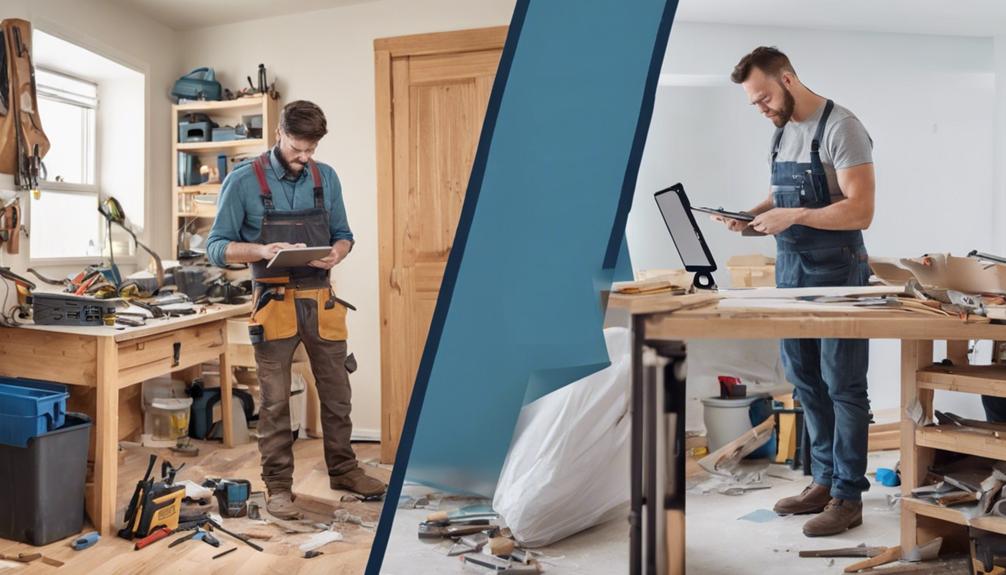
We've all been there – thinking we can tackle a home improvement project on our own, only to realize it's more complex than we anticipated. When deciding between DIY and hiring a pro, we need to take into account the project's scope, our skills, and the risks involved. Tight deadlines, specialty skills, and permits are just a few factors to weigh. By being honest about our limitations, we can prevent costly mistakes and guarantee a successful renovation. As we navigate these considerations, we'll uncover the key to knowing when to take the reins and when to call in the experts.
Small Tasks Vs. Large Projects
When tackling home improvements, we often find ourselves standing at the crossroads, deciding whether to take on a task ourselves or call in the professionals, a dilemma that largely depends on the scope of the project at hand. As homeowners, we're naturally inclined to want to take on smaller tasks to save money and feel a sense of accomplishment. And rightly so – small tasks like painting a room, replacing light fixtures, or fixing leaky faucets are often within our capabilities.
However, when it comes to larger projects, it's important to assess our skills and resources honestly. Do we have the necessary expertise and time to complete the project efficiently? Or will it end up taking longer, causing more stress and potentially leading to costly mistakes? Large projects like renovating a kitchen, installing new flooring, or reconfiguring plumbing and electrical systems often require specialized knowledge and equipment.
We need to be realistic about our limitations and recognize when a project is beyond our capabilities. It's vital to weigh the potential risks and benefits of DIY versus professional intervention. By doing so, we can make sure that our home improvements turn out as envisioned, without breaking the bank or compromising our relationships with family and friends. After all, our homes are where we create memories and share experiences – let's make sure we're making the right call for our well-being and peace of mind.
Tool Expertise and Safety Concerns
When tackling home improvements, we often underestimate the importance of tool expertise and safety concerns. We might be tempted to take on a project, but if we don't have the right tools or know-how, we're putting ourselves at risk. From specialized equipment to potential hazards, it's essential we assess our capabilities and decide whether to hire a pro or take on the task ourselves.
Specialized Tools Required
Operating on a DIY mindset can sometimes lead us to underestimate the importance of specialized tools, which can compromise our safety and the quality of our work. We often assume that our trusty old hammer and screwdriver will get the job done, but that's not always the case. Certain projects require specialized tools that are specifically designed for the task at hand. For instance, tile installation requires a wet saw, and electrical work demands a multimeter. Without these tools, we risk botching the job or, worse, putting ourselves and others in harm's way.
We've all been there – trying to MacGyver a solution with the tools we have on hand. But let's be honest, it's not worth the risk. Specialized tools are designed to make the job easier, faster, and safer. They're an investment in our peace of mind and the success of our projects. By acknowledging the significance of these tools, we can guarantee that our DIY endeavors turn out as planned, and we can take pride in a job well done. So, the next time we're tempted to DIY, let's take a step back and assess whether we have the right tools for the job.
Risk of Injury
We're often so focused on getting the job done that we overlook the risk of injury, forgetting that our lack of expertise with specialized tools can lead to accidents. As DIY enthusiasts, we might think we're saving money and gaining a sense of accomplishment, but the truth is, we're also putting ourselves at risk. Without proper training and experience, we're more likely to slip, trip, or fall, or worse, get electrocuted, crushed, or burned.
Here are just a few examples of the risks we take when we tackle DIY projects without the necessary expertise:
- Power tool accidents: Using circular saws, drills, or other power tools without proper training can lead to severe cuts, lacerations, or even amputations.
- Fall hazards: Working at heights without proper scaffolding or fall protection can result in broken bones, head trauma, or even death.
- Electrical shocks: Fiddling with electrical wiring without knowing what we're doing can lead to electrical shocks, fires, or even fatalities.
Time Constraints and Deadlines
When we're tackling a home improvement project, we often underestimate the time it'll take to complete it. But the reality is, tight deadlines can quickly turn a DIY dream into a stressful nightmare, and meeting project timelines becomes a challenging task. As we'll explore, unexpected delays can happen, and it's essential to take into account our time constraints and deadlines when deciding whether to go DIY or hire a professional.
Tight Deadlines Ahead
With pressing timetables looming, we often find ourselves racing against the clock to complete home improvement projects on schedule. Whether it's a looming holiday party or a new baby on the way, tight deadlines can be overwhelming. As we scramble to get everything done on time, it's essential to assess whether we can realistically complete the project ourselves or if it's time to call in the professionals.
When faced with tight deadlines, it's important to prioritize tasks effectively. Here are three key considerations to keep in mind:
- Assess our skills and expertise: Be honest about what we can realistically accomplish within the given timeframe.
- Evaluate the complexity of the project: Break down the project into smaller tasks and identify potential roadblocks.
- Consider the consequences of delay: Weigh the costs of delaying the project against the benefits of seeking professional help.
Meeting Project Timelines
Meeting project timelines requires careful planning, as our ability to complete tasks on schedule directly impacts the success of our home improvement projects. We understand that delays can lead to increased costs, stress, and frustration. That's why it's essential to create a realistic project schedule, breaking down larger tasks into manageable chunks with specific deadlines. By doing so, we can identify potential bottlenecks and allocate our time and resources more efficiently.
When working on a DIY project, we need to be honest about our availability and capabilities. If we're short on time or lack specific skills, it may be wise to contemplate hiring a professional to guarantee the project stays on track. On the other hand, if we're tackling a smaller task, we can create a schedule that works around our daily routine. By setting realistic milestones and deadlines, we can stay focused, motivated, and committed to completing our project on time.
Unexpected Delays Happen
We've all been there – despite our best-laid plans, unexpected setbacks can arise, throwing our project timelines into chaos. Whether it's a sudden change in weather, a material shipment delay, or an unexpected issue with the structure, delays can be frustrating and stressful.
When we're working on our own, it can be tempting to try to muscle through and get everything back on track as quickly as possible. However, this can often lead to more problems down the line. That's why it's essential to take a step back, reassess, and adjust our timelines accordingly.
Here are a few reasons why unexpected delays can be a blessing in disguise:
- Re-evaluation of priorities: Delays give us a chance to re-examine our priorities and make sure we're focusing on the most critical aspects of the project.
- Improved quality: With more time to focus on specific tasks, we can guarantee that the work is done to a higher standard.
- Reduced stress: By adjusting our timelines, we can alleviate the pressure and stress that comes with trying to meet impossible deadlines.
Permits and Code Compliance
Since local building codes and zoning ordinances vary widely, it's crucial that we determine whether our DIY project requires a permit before commencing the work. Failing to obtain the necessary permits can lead to costly rework, fines, or even legal action. We should always check with our local government to determine the specific requirements for our project.
| Project Type | Typically Requires Permit |
|---|---|
| Electrical work | |
| Plumbing work | |
| Roofing work | |
| Deck construction | |
| Interior painting |
As we can see from the table above, some projects are more likely to require a permit than others. Electrical, plumbing, and roofing work typically require permits due to safety concerns, while deck construction may require a permit depending on the size and complexity of the project. On the other hand, interior painting is usually a permit-free zone.
We should also consider that even if a permit isn't required, our project may still need to comply with local building codes and zoning ordinances. We should always research and understand the regulations in our area to avoid any potential issues down the line. By conducting our due diligence, we can ensure a smooth and successful DIY project that meets all the necessary standards.
Material Selection and Quality
As we move forward with our DIY project, selecting the right materials can make all the difference between a successful outcome and a costly mistake. We've all been there – standing in the aisle of a home improvement store, surrounded by rows of materials that all seem to promise the same results. But we understand that's not always the case. The quality of our materials can affect not only the look and feel of our finished project, but also its durability and functionality.
So, how do we make the right choice? Here are a few things to take into account:
- Durability: Will the material hold up to the wear and tear of daily use?
- Aesthetics: Does the material fit with our desired look and feel?
- Budget: Are we getting the best value for our money?
Unforeseen Complications and Repairs
When tackling a DIY project, unforeseen complications and repairs can quickly turn a simple task into a costly and time-consuming nightmare. We've all been there – we start a project thinking it'll be a quick weekend fix, only to find ourselves knee-deep in unexpected problems. Suddenly, what was supposed to be a straightforward task becomes a major headache, and individuals are left wondering why they didn't just hire a professional in the first place.
One of the biggest risks of DIY projects is that individuals often underestimate the complexity of the task at hand. They might think they can handle a project, but when unexpected issues arise, they're left scrambling to find a solution. And let's be honest, who among us hasn't encountered a surprise leak, electrical issue, or structural problem that they didn't anticipate? These unforeseen complications can be overwhelming, and before individuals know it, their project has spiraled out of control.
When individuals are in the midst of a DIY project, it's easy to get caught up in the excitement of creating something new. But it's essential to take a step back and assess their skills and expertise honestly. If they're not equipped to handle unexpected repairs, it's better to swallow their pride and call in a professional. After all, it's better to spend a little extra money upfront than to risk turning a small project into a massive, costly disaster. By being realistic about their abilities and acknowledging the risks, individuals can avoid the stress and frustration that comes with unforeseen complications and repairs.
Specialty Skills and Licenses
We often lack the specialty skills and licenses required to tackle complex home improvement projects, putting us at risk of violating building codes or compromising safety standards. This is particularly true when working with electrical, plumbing, or HVAC systems, where mistakes can have serious consequences. As homeowners, we may think we're saving money by doing it ourselves, but in reality, we're putting our families and properties at risk.
There are certain tasks that require specialized knowledge and training, and it's essential to recognize when we're in over our heads. Here are three scenarios where it's important to hire a professional:
- Electrical work: Unless we're licensed electricians, we shouldn't be messing with electrical wiring or installing new outlets. One wrong move can lead to a fire or electrocution.
- Plumbing repairs: Fixing a leaky faucet might be DIY-friendly, but when it comes to repiping or installing new fixtures, it's best to leave it to the pros. A botched job can lead to water damage or health hazards.
- HVAC installations: Heating and cooling systems require precise calibration and installation. Improperly installed systems can lead to energy inefficiencies, safety risks, and even carbon monoxide poisoning.
Budget and Cost Savings Analysis
Our DIY enthusiasm often leads us to overlook the long-term financial implications of taking on complex projects, and that's where a budget and cost savings analysis comes into play. As homeowners, we need to take into account the costs associated with materials, labor, and potential mistakes. When we take on a project ourselves, we might save on labor costs, but we may also end up buying unnecessary materials or investing time in trial and error. On the other hand, hiring a professional can provide a more accurate estimate of costs and guarantee that the job is done efficiently.
To make an informed decision, let's break down the costs associated with DIY and hiring a professional. Here's a rough estimate of the costs:
| Category | DIY | Hire a Pro |
|---|---|---|
| Materials | $500 | $500 |
| Labor | $0 | $2,000 |
| Mistakes/Re-work | $500 | $0 |
| Total | $1,000 | $2,500 |
As we can see, while DIY might seem like the cheaper option upfront, the potential for mistakes and re-work can add up quickly. By hiring a professional, we may pay more upfront, but we'll avoid the potential costs of mistakes and ensure that the job is done correctly the first time. When making a decision, we need to take into account not only the initial costs but also the long-term financial implications of our choice.
Frequently Asked Questions
Can I DIY Projects That Require Multiple Skill Sets?
When we take on projects that require multiple skill sets, we often wonder if we're biting off more than we can chew. Honestly, it's tough to be experts in everything! While it's great to challenge ourselves, we shouldn't be afraid to admit when we're in over our heads. If we're unsure about even one aspect of the project, it's probably better to seek help from a pro to avoid costly mistakes and guarantee a successful outcome.
How Do I Handle Unexpected Issues With DIY Projects?
When we encounter unexpected issues with our DIY projects, we don't freak out! Instead, we take a step back, assess the situation, and prioritize the problems. We identify what we can handle and what requires outside help. If needed, we don't hesitate to consult online tutorials, forums, or even call in a pro. We're not afraid to ask for help, and we're willing to adapt our plans to get the job done. By staying calm and flexible, we can overcome those unexpected hurdles and still feel proud of our DIY accomplishments.
Are There Any DIY Projects That Require Special Insurance?
The excitement of starting a DIY project, only to be blindsided by unforeseen expenses! As we begin our DIY journeys, we often wonder, are there any projects that require special insurance? The answer is yes. Certain projects, like those involving asbestos or lead paint, may necessitate specialized insurance coverage. It's important we investigate these requirements to avoid costly surprises down the line.
Can I Claim DIY Work for Tax Deductions or Credits?
We're curious about claiming DIY work for tax deductions or credits. The good news is that we can deduct some DIY expenses, but only if they're considered "capital improvements" that increase our home's value. We'll need to keep receipts and records to prove the work was done to claim these deductions. Additionally, we might be eligible for energy-efficient upgrades credits. We'll consult a tax pro to ensure we're taking advantage of all the deductions and credits we're eligible for.
Do I Need a Contract for Hiring a Professional Contractor?
‘Are we truly safeguarded if something goes wrong without a contract in place? We think not! When hiring a professional contractor, a contract is essential. It outlines the scope of work, payment terms, and timelines, protecting both us and the contractor. We want to guarantee our home improvement project runs smoothly, so we insist on a clear, thorough contract before any work begins. ‘ Additionally, finding the right contractor is just as important as having a solid contract in place. We take the time to research, check reviews, and verify credentials to ensure we are working with a reputable professional. With a well-drafted contract and a trustworthy contractor, we can move forward with confidence, knowing our project is in good hands.