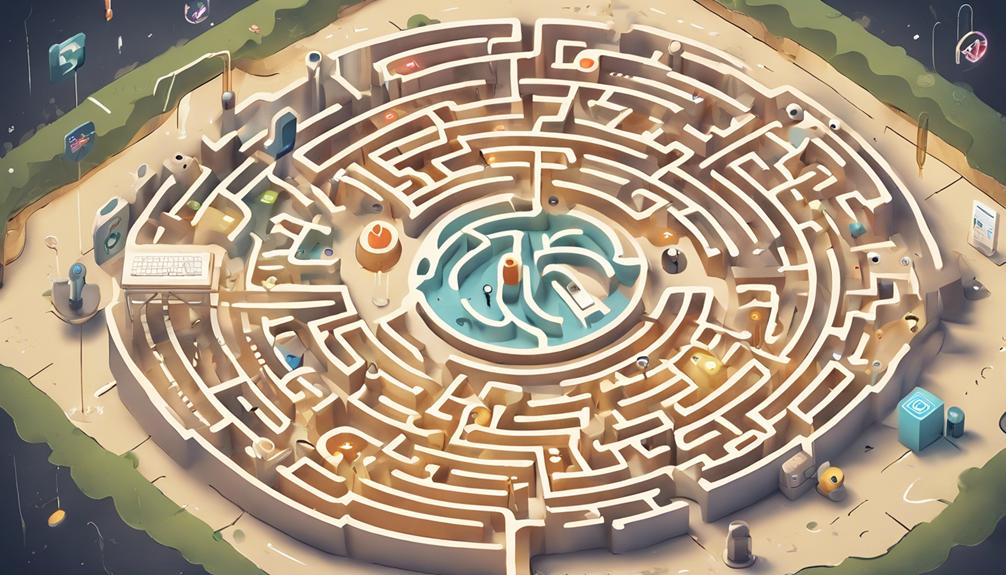
We're constantly grappling with the challenges of multi-channel marketing, where reconciling online and offline efforts, maintaining consistent brand messaging, and managing data fragmentation can make or break our marketing strategies. As we address these complexities, it's essential to integrate online and offline channels, amplify marketing efforts through social media and email integration, and maintain consistency across channels. By aligning our strategies and breaking down departmental silos, we can overcome the obstacles and create a unified marketing approach. As we explore these challenges further, we'll uncover strategies to future-proof our marketing efforts.
Bridging the Online-Offline Gap
As we explore the world of multi-channel marketing, we're faced with the challenging task of reconciling our online and offline efforts, a gap that seems to widen with each new digital innovation. The divide between our online and offline channels has become a significant hurdle, making it difficult to provide a seamless customer experience.
We're constantly looking for ways to bridge this divide, ensuring that our online marketing strategies align with our offline tactics. But it's not an easy feat. The rise of digital technologies has led to an explosion of new channels, and we're struggling to keep up. Our online presence is often disconnected from our physical stores, and vice versa. This disconnect leads to inconsistent brand messaging, confusing customer experiences, and ultimately, lost sales.
We need to find ways to integrate our online and offline channels to create a cohesive brand experience. This means sharing data, aligning our marketing strategies, and providing a seamless shift between online and offline interactions. By doing so, we can create a unified brand voice, improve customer satisfaction, and drive business growth. It's a complex challenge, but one that we must overcome to stay competitive in today's fast-paced marketing landscape.
Channel Fragmentation and Its Consequences
Fragmenting across multiple channels, we're dispersing our marketing efforts, making it increasingly challenging to effectively reach and engage our target audience. As we spread ourselves thin, we risk diluting our message and losing our audience's attention. The more channels we add, the harder it becomes to maintain a consistent brand voice and visual identity.
Channel fragmentation also leads to data fragmentation, making it difficult to track and measure the effectiveness of our marketing campaigns. We're left with disparate data points, making it challenging to get a thorough view of our customers' behavior and preferences. This fragmented approach can result in wasted resources, as we inadvertently target the same customer multiple times, or fail to target them at all.
Furthermore, channel fragmentation can lead to a disjointed customer experience. When we're not providing a seamless experience across all touchpoints, we risk confusing or frustrating our customers. This can ultimately lead to a loss of brand loyalty and trust. As marketers, it's essential we recognize the consequences of channel fragmentation and work towards creating a unified, customer-centric approach that integrates our marketing efforts and provides a cohesive brand experience.
Integrating Social Media With Email
By integrating social media with email, we can create a powerful one-two punch that amplifies our marketing efforts and helps us reach our target audience more effectively. By combining these two channels, we can leverage the strengths of each to create a cohesive and engaging customer experience. Social media platforms allow us to build brand awareness, engage with customers, and share content, while email marketing enables us to nurture leads, build relationships, and drive conversions.
To maximize the benefits of this integration, we need to make sure that our social media and email strategies are aligned. We can do this by sharing social media content via email, using social media to promote email campaigns, and using email to drive social media engagement. For instance, we can share our social media posts via email newsletters, encouraging subscribers to engage with us on social media. Conversely, we can use social media to promote our email campaigns, driving sign-ups and increasing our email list.
Maintaining Consistency Across Channels
We must guarantee that our brand's message, visual identity, and tone are consistent across all channels, from social media to email and beyond, to build trust and recognition with our target audience. This consistency is vital because it helps to create a cohesive brand image that resonates with our audience. When we present a unified front, our audience is more likely to remember us and feel confident in our brand.
To achieve this consistency, we need to establish clear brand guidelines that outline our messaging, visual identity, and tone. These guidelines should be shared across all teams and stakeholders to make sure everyone is on the same page. We should also regularly review and update our content to ensure it aligns with our brand guidelines.
Consistency also means using the same language and tone across all channels. For instance, if we're using a friendly and approachable tone on social media, we should use the same tone in our email campaigns. This helps to create a seamless experience for our audience and reinforces our brand's personality.
Navigating Data Collection and Analysis
As we've worked to establish a cohesive brand image across channels, we've generated a wealth of data that now requires careful collection and analysis to maximize its value. This data, if properly utilized, can provide valuable insights into customer behavior, preferences, and pain points. However, managing data collection and analysis can be a challenging task, especially when dealing with multiple channels.
We've found that it's important to centralize our data collection efforts to guarantee consistency and accuracy. This means integrating our various channel-specific tools and platforms to create a unified data repository. By doing so, we can eliminate data silos and gain a more thorough view of our customers' interactions with our brand.
Once we've collected the data, the next step is to analyze it effectively. This involves identifying key performance indicators (KPIs) that align with our business objectives and using data visualization tools to uncover trends and patterns. By doing so, we can identify areas of improvement, optimize our marketing strategies, and make data-driven decisions that drive business growth. Ultimately, managing data collection and analysis is essential for realizing the full potential of our multi-channel marketing efforts.
Managing Multiple Channel Teams
As we navigate the complexities of multi-channel marketing, we're faced with the challenge of managing multiple channel teams. We need to guarantee that each team is working towards the same goals, breaking down departmental silos and fostering a culture of unified communication. By doing so, we can create a cohesive marketing strategy that drives real results.
Aligning Team Goals
Managing multiple channel teams requires synchronizing individual goals to achieve a unified marketing strategy, which can be a challenging task when each team has its own targets and priorities. We've learned that it's essential to align our team goals to guarantee everyone is working towards the same objectives. To do this, we establish clear key performance indicators (KPIs) that are measurable and achievable. We also make sure to communicate these goals clearly across all teams, so everyone understands their role in achieving our marketing strategy.
Departmental Silo Breakdown
We've found that one of the biggest obstacles in multi-channel marketing is the tendency for individual channel teams to operate in isolation, creating departmental silos that hinder our ability to present a unified brand voice. This can lead to fragmented messaging, inconsistent branding, and ultimately, a poor customer experience.
We've seen it time and time again: social media teams, email teams, and content teams all working independently, without a cohesive strategy or shared goals. This siloed approach not only hampers our ability to communicate a clear brand message but also creates inefficiencies and redundant efforts.
To break down these silos, we need to encourage collaboration and communication among teams. We've implemented regular cross-functional meetings, where teams can share their strategies and align their efforts. We've also established clear, shared goals and key performance indicators (KPIs) to make certain everyone is working towards the same objectives. By breaking down these departmental silos, we can create a more cohesive, customer-centric brand experience that resonates across all channels.
Unified Communication Strategies
By streamlining our communication strategies, we're able to synchronize our channel teams and guarantee a cohesive brand voice resonates across all platforms. This unified approach allows us to break down silos and foster collaboration between teams, ensuring everyone is on the same page. We've implemented regular cross-functional meetings to encourage open dialogue, address concerns, and align our efforts. This has helped us to identify and eliminate redundant tasks, reduce misunderstandings, and increase productivity.
We've also established clear roles and responsibilities, ensuring each team member knows their part in the larger marketing strategy. By defining key performance indicators (KPIs) and shared goals, we're able to measure success and make data-driven decisions. Our unified communication strategy has enabled us to respond quickly to changing market conditions and customer needs, allowing us to stay agile and competitive. By working together as a cohesive unit, we're able to create a seamless customer experience that drives business results.
Overcoming Siloed Communication
As we navigate the complexities of multi-channel marketing, we've found that overcoming siloed communication is vital to our success. We've realized that our departments often work in isolation, creating a fragmented approach that hinders our overall strategy. To overcome this, we need to break down the barriers between our teams and align our department goals to guarantee a unified approach.
Breaking Down Barriers
In today's multi-channel marketing landscape, we are aware of the challenge of integrating our communication channels, as siloed approaches can lead to disjointed customer experiences and missed opportunities. It is evident that our customers interact with us through various channels, including social media, email, and in-store experiences. However, we often struggle to provide a seamless experience across these channels.
| Channel | Goal | Message |
|---|---|---|
| Social Media | Engagement | Promotions and Events |
| Conversion | Exclusive Offers | |
| In-Store | Sales | Product Demos |
| Website | Education | Product Features |
| Customer Service | Support | Troubleshooting |
To break down these barriers, we need to rethink our approach to communication. It is crucial to recognize that each channel is interconnected and that our customers expect a cohesive experience. By aligning our messaging and goals across channels, we can create a more streamlined and effective marketing strategy. By doing so, we can provide a more personalized and engaging experience for our customers, ultimately driving loyalty and revenue growth. Additionally, staying adaptable to changing market conditions ensures that our strategy remains relevant and effective. Global events affecting local marketing can significantly impact consumer behavior, making it essential to continuously analyze trends and adjust our approach. By proactively addressing these influences, we can maintain strong customer relationships and drive long-term success.
Aligning Department Goals
We must synchronize our departmental goals to prevent siloed communication, recognizing that each team's objectives should align with our overall multi-channel marketing strategy. When each department operates in isolation, it can lead to conflicting priorities and a lack of cohesion. By aligning our goals, we guarantee that every team is working towards the same objectives, leveraging their unique strengths to drive success.
To achieve this, we need to facilitate open communication and collaboration across departments. Regular meetings and progress updates can help identify potential roadblocks and areas for improvement. By sharing our goals and objectives, we can identify potential conflicts and make adjustments to ensure everyone is on the same page. This requires a willingness to adapt and be flexible, as well as a commitment to transparency and accountability. By aligning our departmental goals, we can break down silos and create a more cohesive, effective multi-channel marketing strategy that drives real results.
Balancing Personalization and Automation
To maximize the impact of our marketing efforts, we must strike a delicate balance between personalization and automation, recognizing that over-reliance on either approach can lead to diminishing returns. On one hand, personalization allows us to tailor our messages to specific audience segments, increasing relevance and engagement. However, over-personalization can come across as intrusive or even creepy, leading to a negative brand experience. On the other hand, automation enables us to streamline processes, reduce costs, and increase efficiency. Yet, over-automation can result in a lack of human touch, making our brand seem impersonal and unresponsive.
We've found that the key is to strike a balance between the two. By automating repetitive tasks, we can free up resources to focus on high-touch, high-value activities that require a human touch. At the same time, we can use data and analytics to inform our personalization efforts, ensuring that our messages are relevant and timely. By finding this balance, we can create a more efficient and effective marketing machine that drives real results. It's not about choosing between personalization and automation; it's about using both in harmony to create a cohesive, customer-centric marketing strategy.
Future-Proofing Your Marketing Strategy
Embracing a culture of continuous innovation, we're constantly evaluating our marketing strategy to stay ahead of the curve. As we navigate the complexities of multi-channel marketing, we recognize the importance of future-proofing our approach. This means staying agile, flexible, and responsive to shifting consumer behaviors, technological advancements, and emerging trends.
To achieve this, we're committed to ongoing learning, experimentation, and refinement. We're constantly analyzing our marketing mix, evaluating the effectiveness of our channels, and identifying opportunities for optimization.
| Future-Proofing Strategies | Benefits |
|---|---|
| Data-Driven Decision Making | Informed insights, reduced risk |
| Agile Campaign Development | Rapid adaptation, improved ROI |
| Omnichannel Integration | Seamless customer experiences, increased loyalty |
Frequently Asked Questions
How Do I Allocate Budget Across Multiple Marketing Channels Effectively?
When deciding how to allocate our marketing budget, we face a tough question: how do we split our funds across multiple channels effectively? We need to prioritize our goals and assess each channel's performance. We'll analyze our customer journey, identifying touchpoints that drive conversions. Then, we'll allocate our budget based on ROI, customer engagement, and brand awareness metrics. By doing so, we'll maximize our marketing impact and get the most bang for our buck.
What Metrics Should I Track to Measure Multi-Channel Campaign Success?
When it comes to measuring multi-channel campaign success, we focus on metrics that give us a thorough view. We track website traffic, conversion rates, and customer acquisition costs to gauge campaign effectiveness. We also monitor social media engagement, email open rates, and customer retention rates to see how our messages resonate. By keeping a close eye on these metrics, we can adjust our strategy to optimize our ROI and make data-driven decisions.
Can I Use the Same Content Across All Marketing Channels?
Coincidentally, we've all been there – trying to stretch our content to fit every marketing channel. But, can we really use the same content across all channels? Honestly, we don't think so. Our audiences are unique, and what resonates on one platform might fall flat on another. We need to tailor our content to each channel's strengths and our audience's preferences. By doing so, we'll maximize engagement and avoid a one-size-fits-all approach that often backfires.
How Do I Handle Customer Complaints Across Different Channels?
When customers complain, we make sure to listen and respond promptly across all channels. We don't ignore or dismiss their concerns, as it can escalate the issue. Instead, we apologize, empathize, and offer solutions or explanations. We keep our tone consistent and transparent, ensuring our brand's voice shines through. By doing so, we turn negative experiences into opportunities to build trust and loyalty with our customers.
What Is the Ideal Frequency for Multi-Channel Marketing Campaigns?
When crafting a multi-channel marketing strategy, we find that timing is everything. We've learned that the ideal frequency for campaigns depends on the channel and audience. We aim to strike a balance between staying top of mind and avoiding fatigue. For social media, we post 3-5 times a week, while email campaigns are limited to 1-2 per month. By finding this sweet spot, we maximize engagement and conversions.